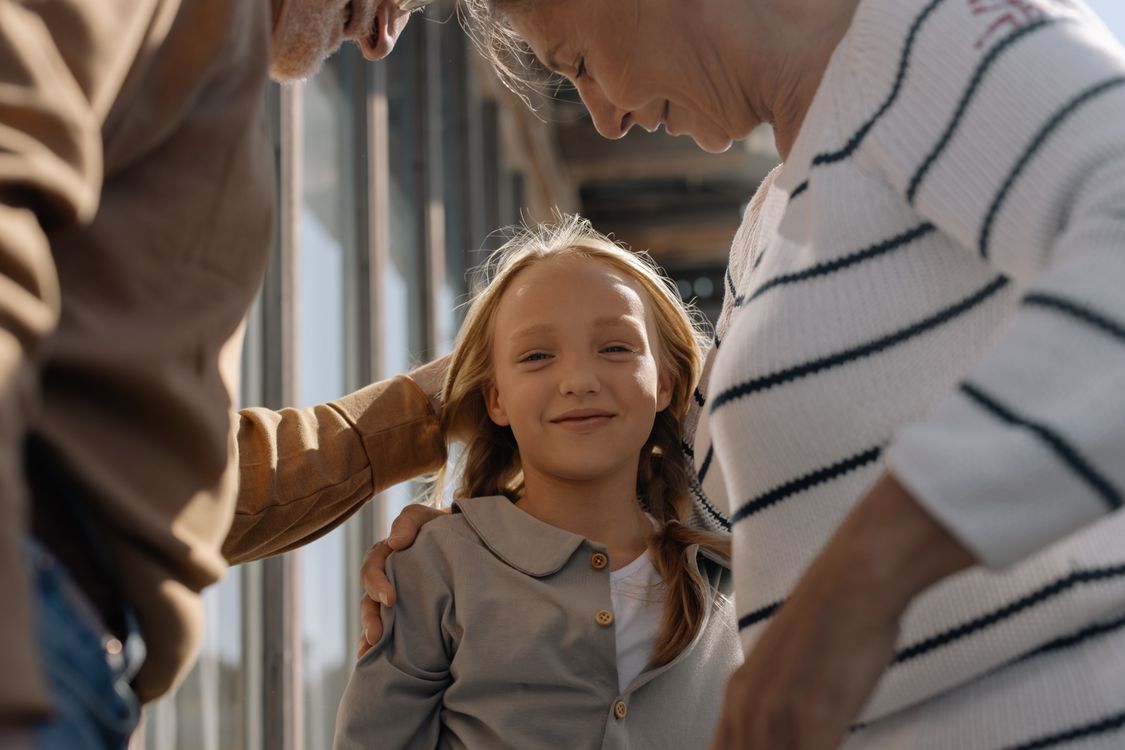
A gift for family abroad in their mother tongue
Buying a gift for family who live far away is harder than it sounds. You want something that feels personal and not just “stuff”, and it also has to travel halfway around the world. And when there are children involved who are growing up in another country, there is often an extra layer: how do you keep the mother tongue alive for a niece, nephew or grandchild who hears a different language every day? In this article you will learn why that mother tongue matters, how stories help, and what makes a good gift for family abroad.
Why the mother tongue matters
For children growing up abroad, the language of the home country is more than handy on holiday. It is the language grandparents tell stories in, the language family traditions live in, and the language that carries part of a child’s own identity.
Research underlines that importance. UNESCO has long argued for education in the mother tongue, because children learn better through it and stand more firmly in their identity. And the linguist Annick De Houwer has shown that the chance a child keeps actively speaking the home language depends heavily on how much they hear and use it. In other words: without enough input, a second language fades faster than parents expect.
Books as a source of language
This is where reading aloud comes in. A book offers rich, repeated language: sentences a little more complex than everyday speech, and words that rarely come up in ordinary conversation. For a child who hears the mother tongue only a few hours a week, a book like that is concentrated input they can return to again and again.
And because children love to hear the same book repeatedly, that language sticks better. It is precisely that repetition that helps fix words in place.

A gift that bridges the distance
Practically speaking, sending a physical gift abroad is often a hassle: customs, shipping costs, breakable things. A book that we print and ship worldwide solves that. It is printed locally or internationally and simply arrives, without you having to wrestle with parcels.
And unlike a generic gift, a personal book is genuinely unique: it is about this child, with their own name in it. That makes it something to keep straight away, not something that disappears into the toy box after a week.
When it is not the right choice
Honestly, a book is not always the best gift. For a baby under roughly eighteen months, a story barely lands yet. If no one in the family reads the mother tongue aloud, the book will sit unused on the shelf. And sometimes regular contact, a weekly video call with grandparents, is worth more than any object.
A gift does not replace a relationship. It works best as something added to the moments when family actually talk to each other.
Other ways to nurture the mother tongue
A book is therefore only one tool. Video calls in which grandparents read aloud or sing songs, audio stories and children’s songs in the mother tongue, a few words sent back and forth by post, or the foreign-language corner of the library: it all helps. The strength lies in variety and repetition, not in one perfect gift.
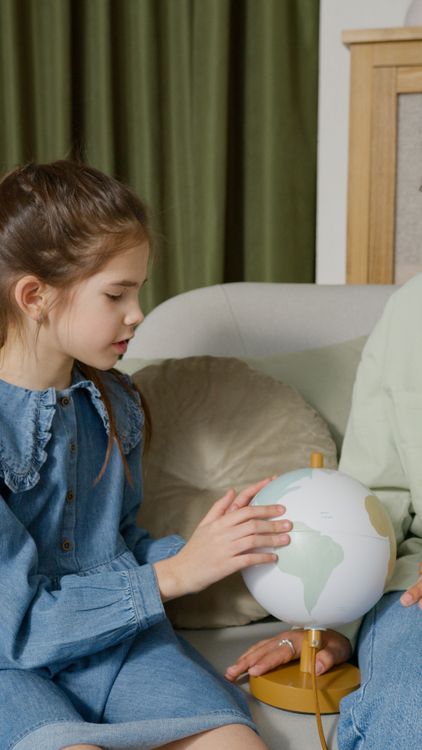
A personal book in your own language
Against that backdrop, a personalised children’s book makes a lovely gift for family far away. You make it in the language you choose, with the child as the main character, and we print and ship it worldwide. The child hears the mother tongue in a story that is literally about them, complete with their own name.
If you would like to dig into why that works: read how children learn through stories in which they see themselves and why they want to hear the same book again and again, exactly the repetition that makes language stick. You can put together a personalised children’s book yourself in your family’s language.
In summary
You do not surprise family abroad with just anything, but with something personal that also does something. A book in the mother tongue, with the child in the lead and delivered worldwide, is exactly that kind of gift: it bridges distance, it is unique, and it quietly keeps the language of home alive. Not as a replacement for real contact, but as something to read together, again and again.
Sources
- UNESCO. International Mother Language Day and mother-tongue-based multilingual education.
- Cummins, J. (2001). Bilingual Children’s Mother Tongue: Why Is It Important for Education? Sprogforum, 19, 15 to 20.
- De Houwer, A. (2007). Parental language input patterns and children’s bilingual use. Applied Psycholinguistics, 28(3), 411 to 424.