
The IKEA effect: why homemade gifts mean more
A wobbly stool you screwed together yourself often feels nicer than a far better chair from the shop. A homemade gift you spent hours on feels more valuable than something pricier you bought ready-made. That is not a coincidence, and it is not only sentiment. Psychologists have a name for it: the IKEA effect. In this article you will learn what it is, why effort leads to appreciation, and when making something yourself does not work.
What the IKEA effect is
The term comes from a series of experiments by Michael Norton, Daniel Mochon and Dan Ariely (2012). They had participants assemble simple IKEA storage boxes, fold origami or build with Lego. Afterwards they asked how much the makers would pay for their own creation, and how much others would pay for it.
The result was consistent: people valued their own, sometimes clumsy creations as highly as the work of experts, and considerably higher than outsiders did. The researchers called this the IKEA effect: investing your own effort raises the value you attach to the result. Anyone who wants to read the details can download the original study.
Why effort leads to appreciation
A few things are at play. By putting effort into something, you add a piece of yourself: your choices, your time, your attention. That makes the result personal rather than interchangeable.
On top of that, finishing something gives a feeling of competence. You have brought something into being, and that feeling colours how you see the end product. Psychologists also speak of effort justification: we justify our effort by valuing the result more highly. The object carries, as it were, a piece of its maker with it.
The limit: when making it yourself does not work
The IKEA effect is no guarantee. In the same research, the effect disappeared as soon as people did not finish the task. Those who give up halfway or get stuck feel frustration rather than pride, and actually value the result lower. Completing it is therefore a condition.
It is also true that not every gift has to be homemade. Sometimes a well-chosen ready-made present is exactly right, and an over-ambitious craft project that ends up half-finished in the loft does no one any favours. And watch out for the trap of a gift that is more about the maker than the recipient. The skill lies in the balance: enough of your own input to make it personal, without it becoming an exhausting chore.
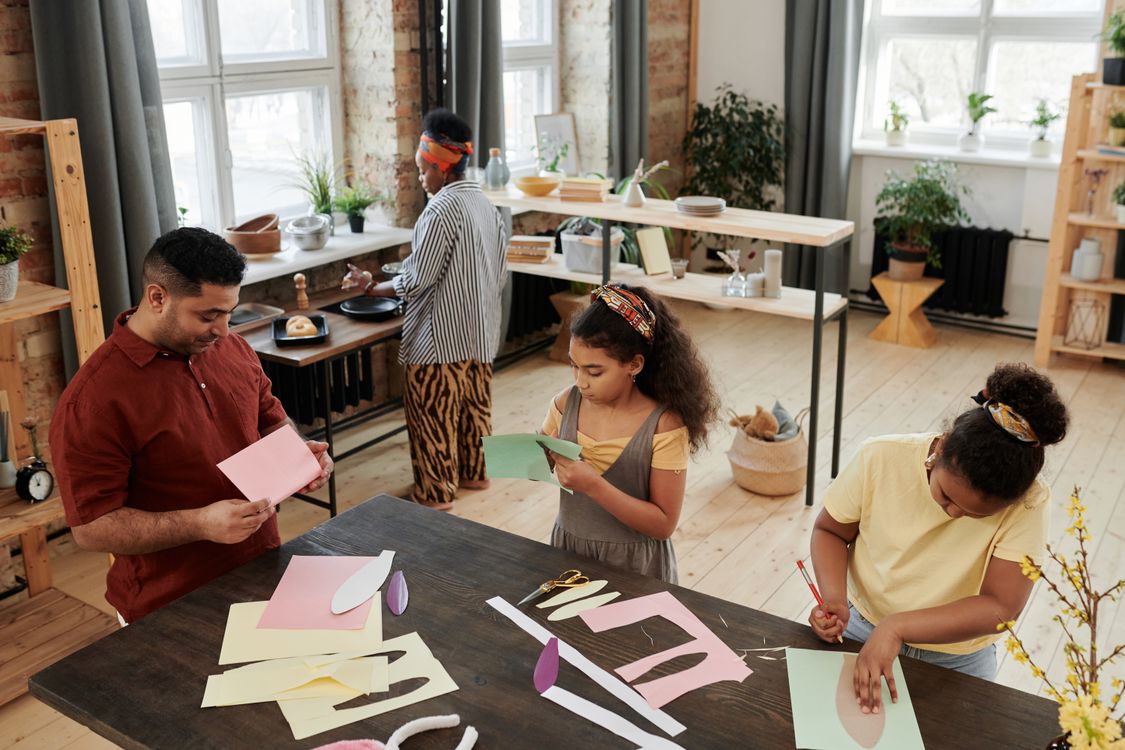
From flat-pack to gift
What holds for storage boxes holds just as well for gifts. A present you made choices in lands harder, for the giver and for the recipient. The giver feels the pride of taking part, and the recipient senses that attention and time went into it.
You can do this entirely yourself, with a written story or a scrapbook full of photos. That produces the strongest IKEA effect, but it also takes the most time and skill. At the other end of the spectrum sits the fully ready-made gift: no effort, but also less of yourself in it. Most people look for something in between.

A gift you help build yourself
A personalised book sits right in that middle ground. You make the meaningful choices yourself: the name, the child in the lead, the photos, the details of the story. Those are exactly the steps that trigger the IKEA effect, and that make the gift yours. The laborious part, the illustrating and printing, is done for you, so you keep the effort-to-appreciation without the half-finished project in the loft.
That also explains why such a book often becomes a keeper. Read, for example, why children want to hear the same book again and again, or why a personalised book makes a much-loved gift. If you would like to experience the mechanism yourself, you can put together a personalised children’s book in which your child is the main character.
In summary
The IKEA effect shows that value does not lie only in the object, but in the effort you put into it. Making something yourself adds a piece of yourself, provided you finish it and it does not get out of hand. A gift with your own input therefore lands harder than something you simply pay for. It is not the price but the attention you put in that makes the difference.
Sources
- Norton, M. I., Mochon, D., & Ariely, D. (2012). The IKEA effect: When labor leads to love. Journal of Consumer Psychology, 22(3), 453 to 460.
- Mochon, D., Norton, M. I., & Ariely, D. (2012). Bolstering and restoring feelings of competence via the IKEA effect. International Journal of Research in Marketing, 29(4), 363 to 369.