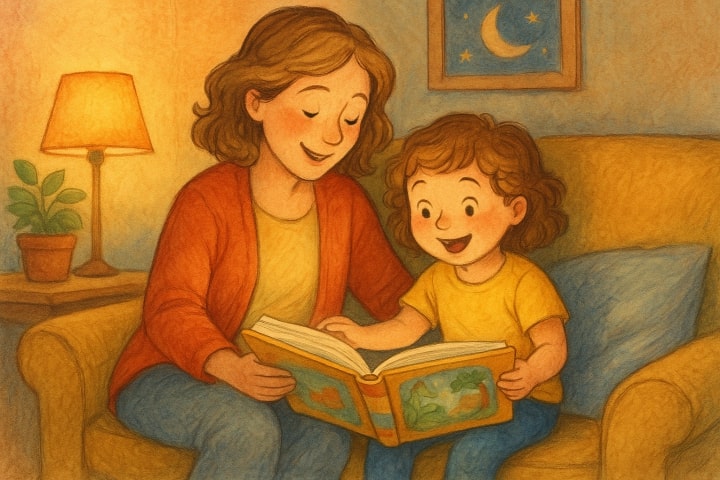
Learning through stories: why children grow from reading
Discover how children grow through stories and learn through play. Practical tips for parents to make reading fun.
A good story is more than just entertainment. It opens a world full of possibilities. By reading together or listening to stories, children discover new words, learn to express themselves better, and grow in their imagination and self-confidence. At MyOwnChildbook, we see every day just how powerful stories can be.
Why stories matter
- Language development. Children pick up new words and sentence structures naturally and playfully. Research consistently shows that children who are read to daily have a larger vocabulary than those who aren’t — sometimes thousands of words of difference before they turn six.
- Imagination. A book takes children to places and adventures they wouldn’t encounter in real life. A good story trains visualisation — a skill that later helps with reading comprehension, writing, and even problem-solving.
- Connection. Reading together strengthens the bond between parent and child. It’s one of the few daily moments where phones go aside and you genuinely share an experience.
- Empathy. By living through characters, children practise perspective-taking: how does someone else feel, why would they act that way, what would I do?
Reading isn’t a luxury — it’s a solid foundation for learning and growing.
How do you make reading appealing?
Many parents wonder how to keep their children enthusiastic about books, especially with screens calling for attention from all sides. A few simple ideas that make a real difference:
- Connect with their interests. Does your child love animals, knights, space exploration or dinosaurs? Choose books that put those themes front and centre. It doesn’t matter if it isn’t your idea of great literature — a book your child picks themselves gets read more often.
- Make it a regular moment. Before bed or right after school: a small ritual brings calm and makes reading feel familiar. Even five to ten minutes a day has an impact.
- Read aloud (even when your child can read themselves). Up until about age ten, reading aloud stays valuable, precisely because your child hears words they can’t yet decode fluently. Read-aloud level is often a grade higher than self-reading level.
- Give children a say. Let them choose a book themselves, or even better: let them help shape their own story with MyOwnChildbook.
- Talk about the story. A question or two after reading (“what would you have done?”, “what do you think it’s about?”) deepens the reading and builds comprehension.
Which book at which age?
- 0-2 years: board books with large, simple images. Short sentences or just labels. The ritual of looking together matters more than the story itself.
- 2-4 years: picture books with a repetition element and clear characters. Children bond with familiar characters and want to hear the same book ten times — that’s normal and developmentally useful.
- 4-7 years: adventure, recognition, first simple plots. From here a personalised children’s book works especially powerfully because the child can be the main character themselves.
- 7+ years: first solo-reading books, often in a series. Reading aloud to your child remains valuable; at the same time they take over part of the work themselves.
Extra inspiration
Want to read more about how stories help children grow? On the page Kinderboeken at expertpagina you’ll find more background and inspiration.
Our own site is happy to help you further too. Have a look at the FAQ or read the About us page to see how we contribute to a love of reading in every child.
To wrap up
Stories don’t just build a child’s language skills: they nurture imagination, curiosity, and self-confidence too. So grab a book together, settle in on the sofa and experience for yourself how valuable reading can be. Whichever book you choose, the simple act of reading together is already half the work.
Want a book where your child is the actual protagonist — for extra recognition and reading engagement? Read our complete guide to personalised children’s books.