Reading Aloud, Audiobook or Screen?
It is quarter to eight and your child wants a story. You could read aloud yourself, put on an audiobook app, or start an animated video so you get five quiet minutes. All three feel like “offering a story”. Neurologically, they are three completely different experiences.
Paediatric neurologist Dr John Hutton and colleagues at Cincinnati Children’s Hospital tested this literally, with an MRI scanner. In a widely cited study published in Pediatrics (2015), they had 27 four-year-olds listen to and watch stories in three formats: audio-only, an illustrated picture book read aloud, and an animated video. In each condition, they measured which brain regions activated and, more importantly, how well those regions communicated with one another.
What the scans showed
During audio-only, the children’s language network worked hard, but its connection to the brain regions that build visual imagery stayed weak. Without pictures or context, the children had little scaffolding to picture the story; for some four-year-olds, that turned out to be simply too much to ask.
The animated video showed the opposite pattern: visual brain regions lit up intensely, but their cooperation with the language network actually dropped. Hutton interpreted this as a form of cognitive outsourcing - the animation was already doing the imagining, so the child needed to supply less imagination of their own.
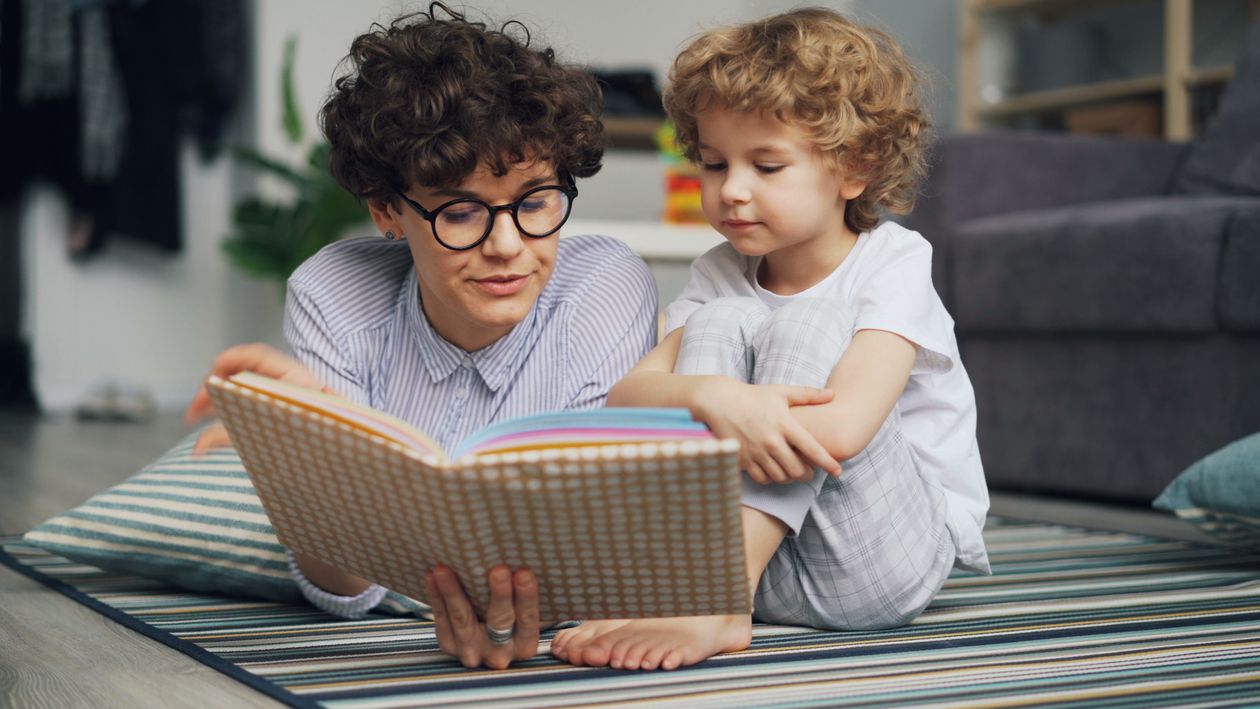
The illustrated, read-aloud version landed right in between. Language and visual networks worked together most strongly there: enough support from the pictures to follow the story, but not so much that the child had nothing left to do. Hutton called this the “sweet spot” for story comprehension at this age.
Why that doesn’t mean screens are bad
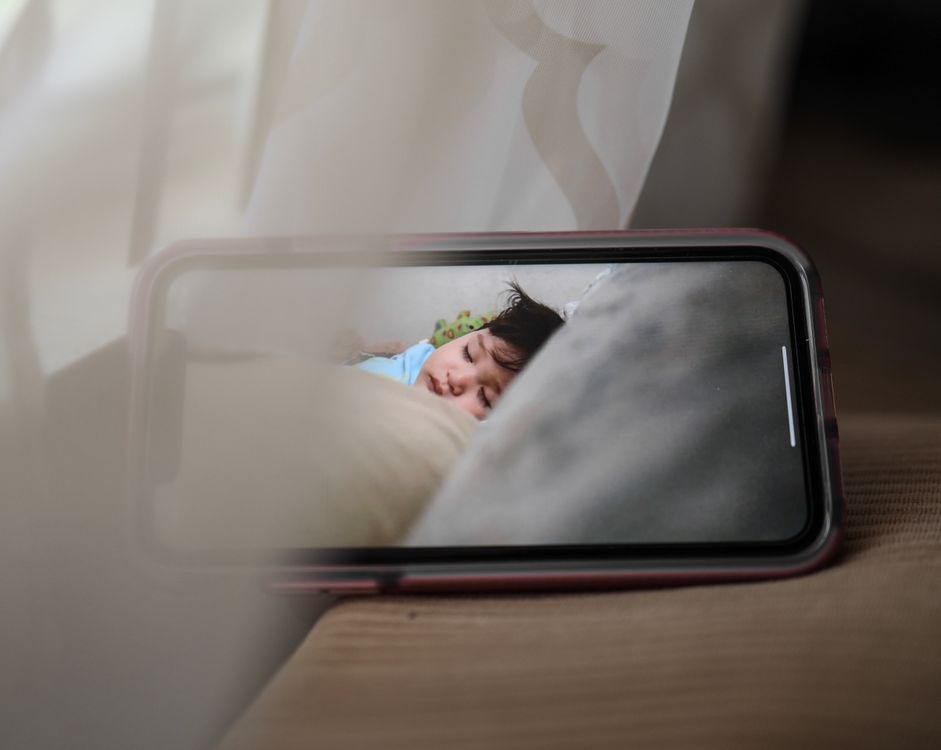
It’s tempting to turn this into a simple ban, but that misreads the data. The study says something about brain activity during a single measurement in four-year-olds, not that every audiobook or video is harmful. In fact, there are situations where an audiobook is the better choice. On a long car journey, when you genuinely cannot read aloud yourself, or for a six- or seven-year-old who can already follow independently, a well-narrated audiobook - think of a library’s audio-lending service with professional narrators - is a valuable addition. Children sometimes hear richer language and intonation there than a tired parent can manage at the end of the day.
Our earlier article on when a personalised book isn’t the right choice covers similarly honest trade-offs: not every medium fits every moment, and that’s fine as long as you know why you’re choosing what you choose.
What I notice as a father and data engineer
I build an AI image pipeline for a living, so screens and algorithms are literally my day job. That’s precisely why I choose the physical, illustrated book on purpose for the actual bedtime moment. What I see in my own children lines up surprisingly well with Hutton’s findings: with a picture book, they ask questions, point at things, interrupt the story. With a video, they go quieter and more passive - fine for five calm minutes, but clearly a different mode.
That’s not an argument against audiobooks or screens in general. It’s an argument for choosing deliberately which medium fits which moment, rather than treating them as interchangeable.
Where a personalised book fits
The “sweet spot” Hutton describes - illustrations plus a living, reading voice - is exactly the shape of a personalised children’s book. There’s an extra layer on top: the child doesn’t just hear a story, they hear their own name and see themselves in the illustrations. On how it works you can read how our illustration pipeline builds every page around the child themselves, rather than around a generic main character.
That same repetition and recognition also explains why children want the same book read a hundred times - a phenomenon we explore further in another article.
The choice that remains
No single medium wins in every situation. An audiobook in the car, a video for five minutes of quiet, and an illustrated story at bedtime can all sit comfortably side by side. What Hutton’s research mainly shows is that the reading-aloud moment - you, a book with pictures, and a child thinking along - does something neurologically that no screen replicates. That’s exactly what makes that one moment worth choosing deliberately.