
Christening, dedication or naming ceremony?
In 2024 the Roman Catholic Church in the Netherlands recorded roughly 6,100 child baptisms, of which about 5,600 were children under seven. That was a fall of around 7 per cent on the year before. The figures come from Kaski, the research bureau at Radboud University that collects them annually on behalf of the church.
We could not find equally recent and equally solid figures for the UK, so treat that number as Dutch rather than as a claim about your own country. The direction of travel, though, will be familiar to most people in western Europe: an invitation to a christening is no longer a given, and there is increasingly someone in the pew who is not sure what is about to happen.
This piece puts four forms side by side. Not to say which is the right one, but so you know where you are sitting.
The christening
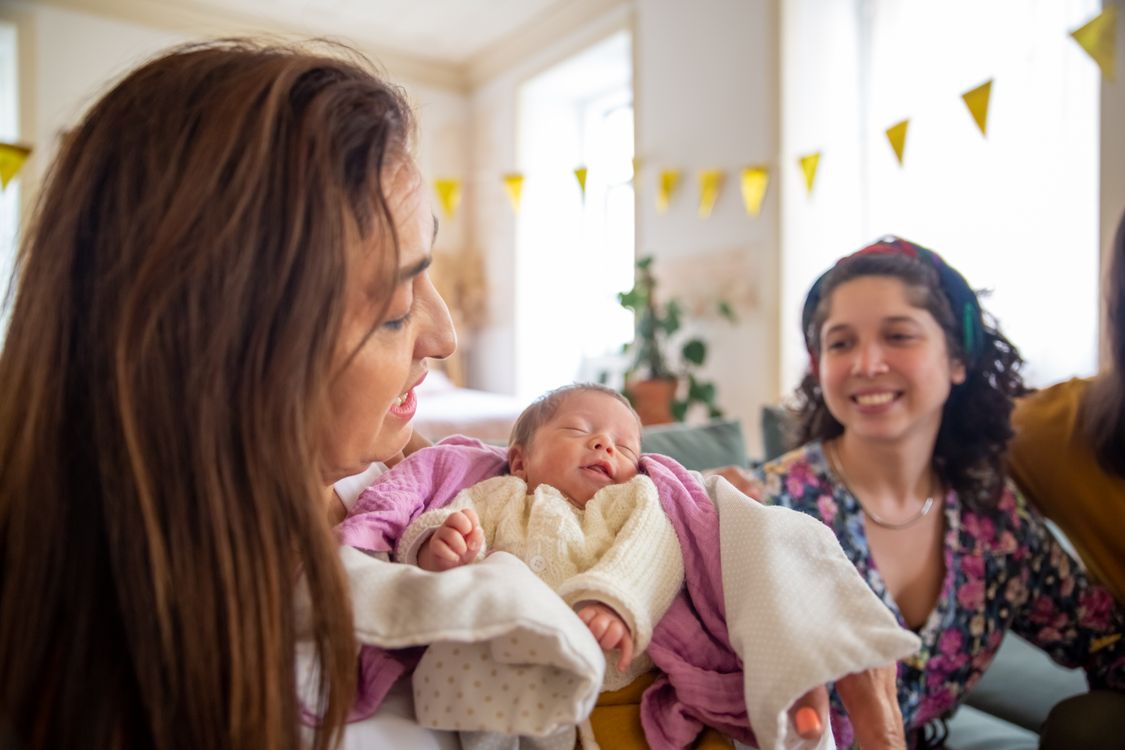
At a christening in the Anglican or Catholic tradition, godparents stand beside the parents. They are asked in advance and say yes out loud on the day: they promise to help the child grow up in the faith. In many families that is also a social role that outlasts the service, whatever anyone’s churchgoing looks like later.
The priest pours water over the child’s head while saying their name. Depending on the tradition there may also be anointing with oil, a white garment, and a candle lit from the large one at the front of the church. That candle goes home afterwards, and in some families it is still lit on birthdays years later.
What you do as a guest: usually nothing in particular. You stand when everyone stands and you are quiet when it is quiet. The order varies between parishes, so take your cue from the people around you.
Where the emphasis differs
Not every christening is about the same thing. In some traditions the weight sits on the covenant and the promise: the parents say out loud that they intend to raise this child in the faith, and the congregation is asked whether it will share that responsibility. Usually the whole church answers aloud.
Godparents are not always a formal requirement there. Some congregations have witnesses instead, some have neither. What is always present is the moment the child’s name is read out with everyone listening. In a lot of churches that is the quietest minute of the whole service.
Dedication: no water, but a blessing
In Baptist and many evangelical churches, babies are not baptised at all. The thinking is that baptism is a choice you make yourself, and it therefore waits until the child is old enough to know what they are doing. That baptism often follows later, by full immersion, after a personal profession of faith.
What does happen in babyhood is called a dedication or a blessing. The parents stand at the front with their child, hands are laid on the small head and there is prayer. No water is involved, and there is no font.
This is exactly the point where things go wrong if you do not know. A card saying “congratulations on the baptism”, or a gift with a font on it, lands badly here however kindly it was meant. It is not the same occasion.
The naming ceremony with no church
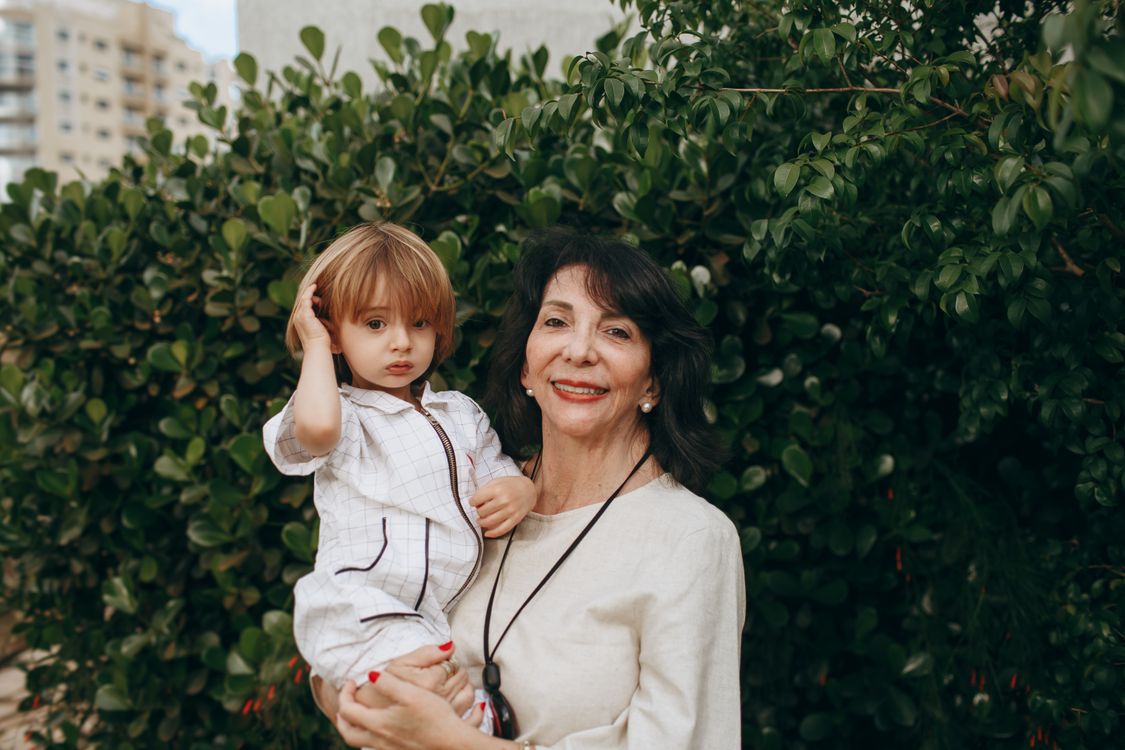
There is a fourth form, and it has been growing: a secular naming ceremony with no religious content. Often at home or in a hired room, with a celebrant or simply a parent who takes the floor. Some families appoint two people to a role that resembles godparents, sometimes called supporting adults or guide parents.
Nothing about the format is fixed, and that is precisely what makes it confusing: if you are invited to one, you do not know whether there will be speeches, whether anything is expected of you, or whether you are simply coming to eat. It is fine to ask. That is far less awkward than guessing.
What all four have in common
In all four, one and the same thing happens: the child’s name is said out loud, in front of a group of people who came together for it. Above a font, at a table in a hired room, it makes no difference to that moment.
Which is striking, because the child notices none of it. A three-month-old will remember nothing of the day. The occasion is really for everyone else: they are saying out loud that this child belongs, and that their name will be spoken and remembered.
With my own children what struck me was how long that lasts. Not for them, but for us: you still know exactly who was standing where, who was late, and who cried when you had not expected it.
When a big occasion does not fit
Not every family wants this, and that is not a failing. When the parents are not religious but the grandparents are, a christening can turn into a compromise nobody enjoys. A small moment at home, with only the people who genuinely belong there, is more honest than a service where half the room feels awkward.
And if you are unsure, there is no reason to decide within a year. Some families wait until the child can take part themselves, and that is a perfectly good answer.
What you give
Silver cutlery and a savings account are decent presents, but they tell you nothing later about the day itself. Something that does: a letter to the child, written on the day and to be opened at eighteen. It costs nothing and it is almost always the gift that survives. The candle with the date on it works the same way.
If you want something the child can read for themselves later, to find out who was there, you can have a book made about the day with their name running through the story, written for a christening or for a dedication service. How the personalisation works is set out on our page about a book with a name in it. And if you are looking for something for just after the birth rather than for the day itself, see what makes a new baby gift special.
In the end it does not matter which of the four you choose. It comes down to the one act they all share: someone says a name out loud, and a room full of people hears it. That is the whole point, and it works just as well at a kitchen table as in a church.