Your pet or your town on a mug: how to get it printed
A mug with your dog on it, your own town as a watercolour, the drawing your daughter made last week, on a cushion. These are small gifts that often outlast big ones, because they get used every day. As of this week you can have that sort of thing printed through a new sister site of ours, and building it taught us a lot: which photo is good enough, what goes wrong on a mug, and when the shop round the corner is the better choice.
This piece is based on the proofs we made and ordered ourselves over the past few weeks. There is no independent study of “the best photo for a mug”; what follows is what we measured and saw.
Five ideas that work well
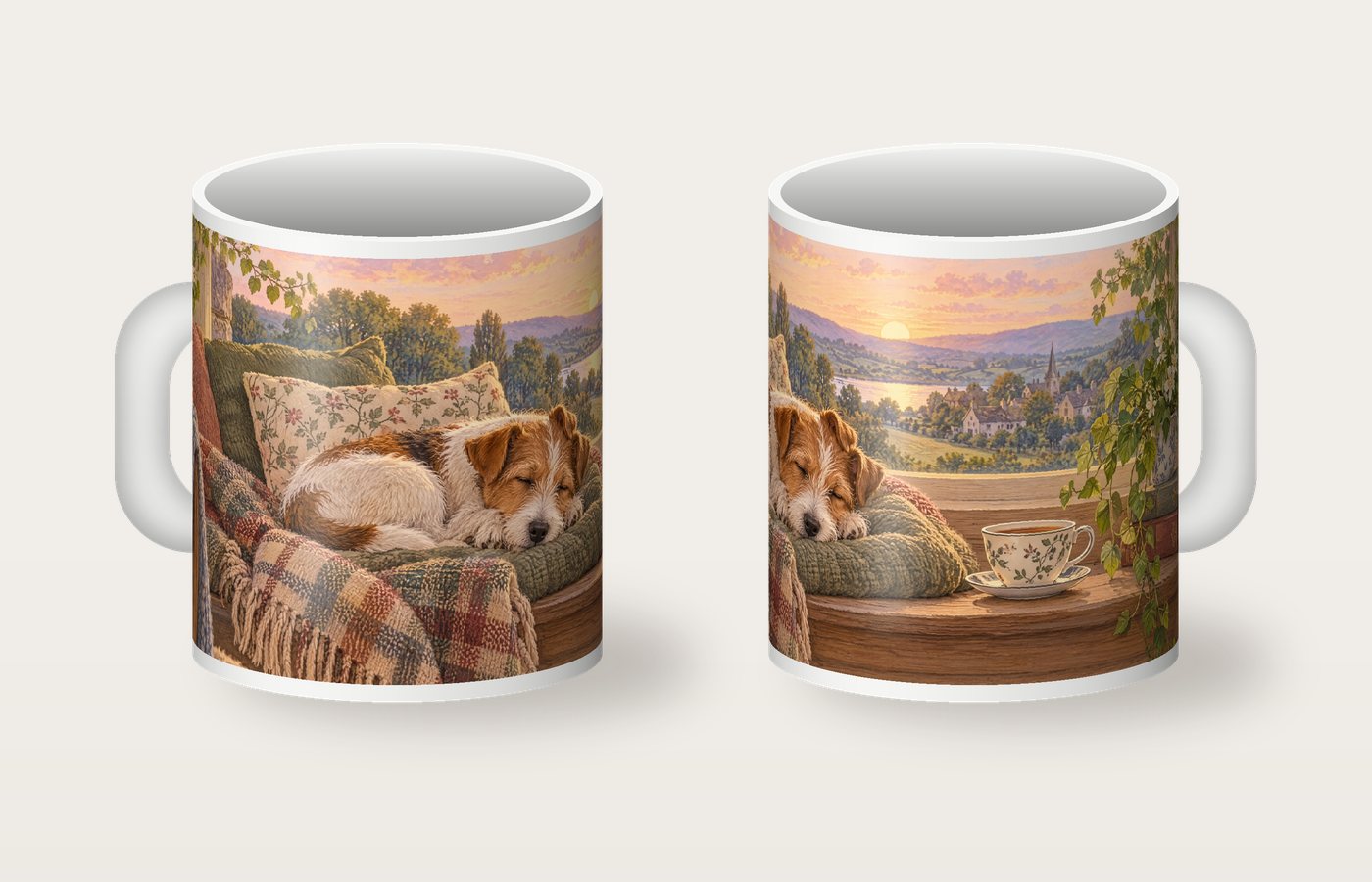
1. Your pet. The classic, and rightly so. A dog or cat on a mug works best when the animal fills the frame and the eyes are sharp. Shoot at the animal’s eye level, in natural light from a window and without flash (flash gives you glowing eyes). Tap the eyes on your phone screen so the camera focuses there.
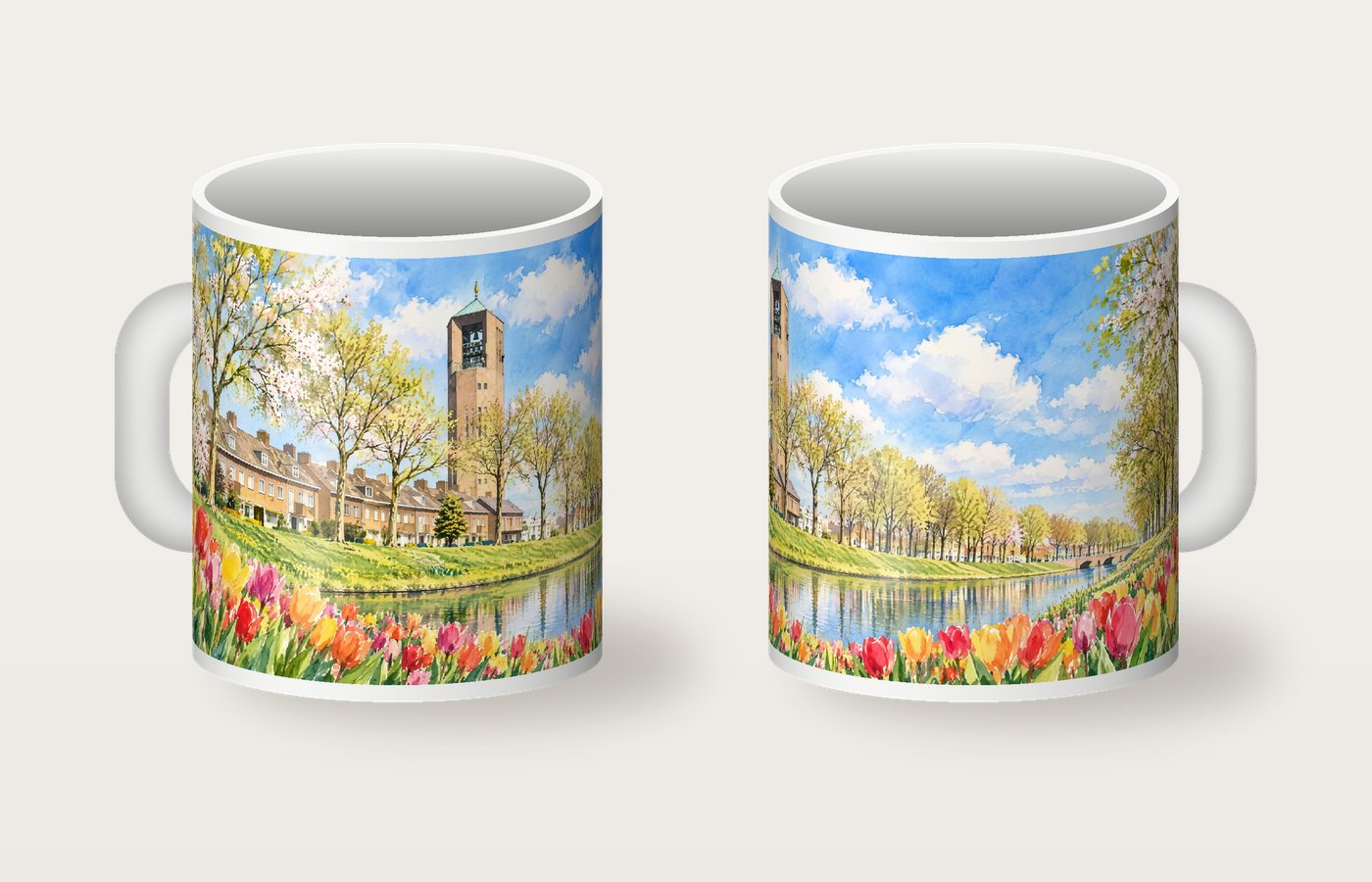
2. Your town, village or street. A photo of your own church tower or high street can work, but a drawn version often looks better on a mug, because the parked cars and wheelie bins disappear. The first mug we ordered ourselves was exactly that: the Poldertoren, a tower in the Dutch town of Emmeloord, as a watercolour with tulips in front of it. The hard part is that a drawn tower still has to look like the real one, so the design starts from a real photo of the place.
3. A drawing by your child. On a mug for grandad, a cushion for the sofa or a poster for the hallway. A child who sees their own drawing on something real often reacts the way they do to seeing their name in a book. We wrote about that in why children want to see themselves in books.
4. A holiday photo as a jigsaw. A 500-piece jigsaw of the beach you visited in August is an evening together, rather than a photo you never open again.
5. A calendar for the grandparents. Twelve photos from the past year, a different one each month. A present grandparents see hanging on the wall all year round.
How many pixels do you need?
This is the question that prevents most disappointments. Printers work in dpi, dots per inch: 300 for something you look at up close, such as a card or a mug, and around 150 for a poster on the wall.
The print area of a standard mug is roughly 20 by 8.8 centimetres. At 300 dpi that is about 2,360 by 1,040 pixels. A photo someone sent you on WhatsApp has often been shrunk to around 1,600 pixels on the long side. For a mug that is tight, about 200 dpi, but usually still usable; for an A2 poster (42 by 59.4 centimetres) it is nowhere near. An ordinary 12-megapixel phone photo (4,032 by 3,024) handles A3 comfortably and A2 reasonably well.
The rule of thumb: ask for the original photo, not the forwarded one. And be suspicious of screenshots, which are often smaller than you think.
What goes wrong on a mug
A mug is not a square. The print area is a wide strip that runs round the cup, more than twice as wide as it is tall. Put a portrait photo on it and you lose almost everything at the top and bottom.
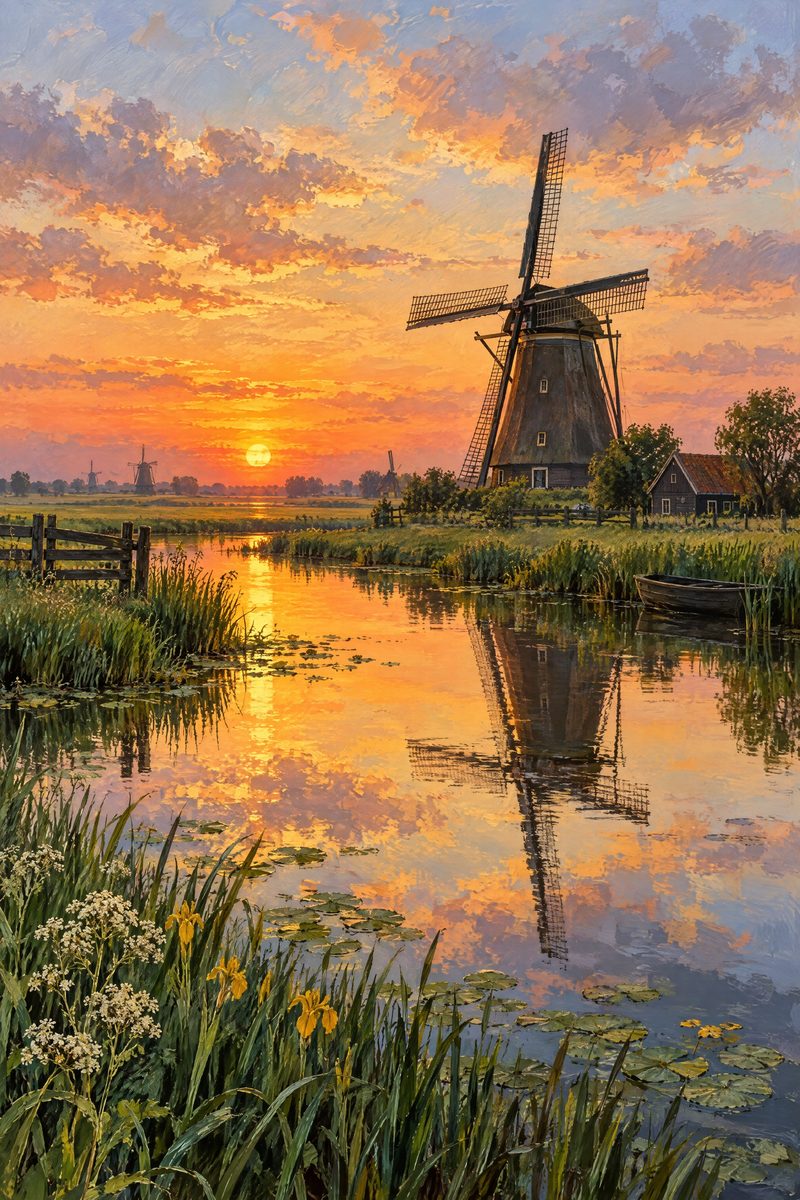
In our very first test we put an upright photo of a windmill at sunset on a mug. Seventy-one per cent of the image was lost: the sails were cut in half and the water was gone. That is why we now make each design in the shape of the product from the start: choose the mug first, then make the image, so the subject fits the strip and any text does not disappear behind the handle.
Two other things we saw more than once:
- Text against the edge. A name or date that runs right to the edge gets cut off at the top or bottom edge or around the handle. Keep text in the middle.
- A busy background. A dog on a cluttered sofa vanishes on a mug. A calm background, or the animal drawn against a plain backdrop, works better.
Capturing your child’s drawing properly
A drawing does not need a scanner. Lay it flat near a window during the day and photograph it straight from above, without your own shadow falling across it. White paper helps: the background on the mug then stays white rather than grey. Crayon and felt-tip come out well; pencil is sometimes too light and can be darkened a little.
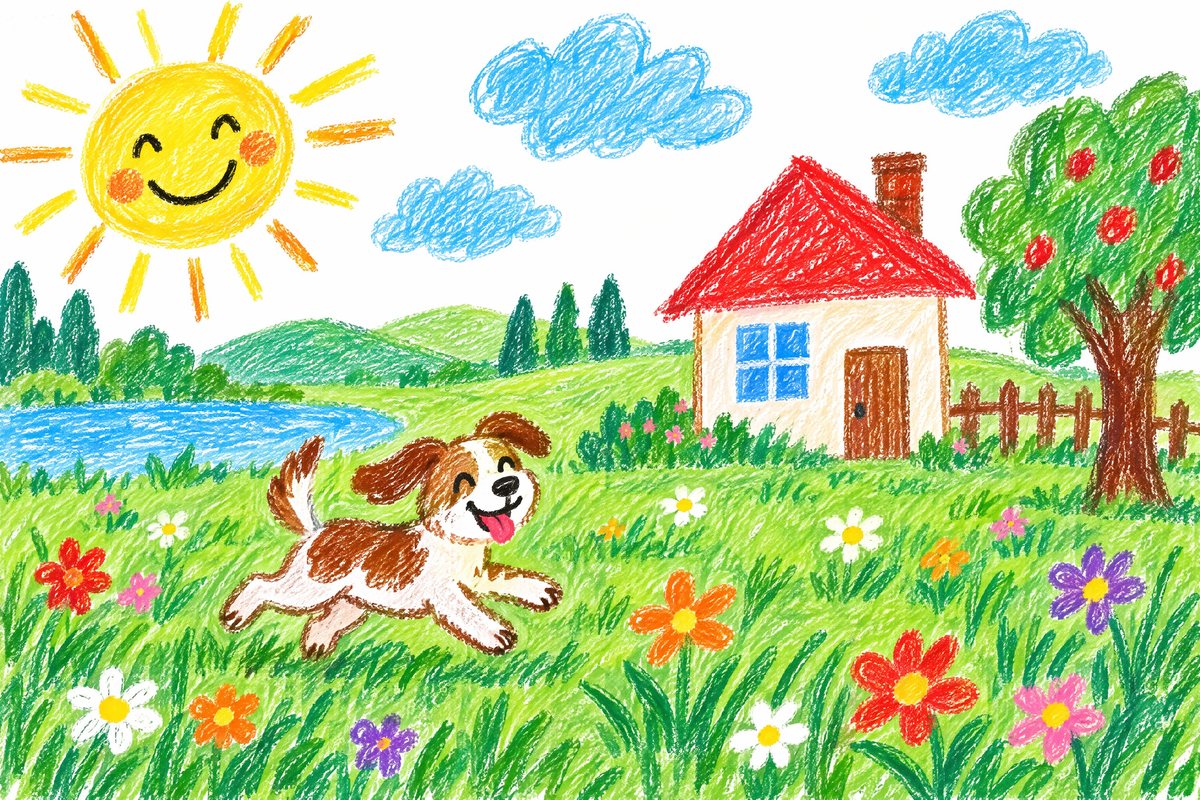
Mind the shape here too. A landscape drawing with a house, a sun and a dog fits the strip around a mug nicely. An upright portrait of granny works better on a poster or a cushion.
When to choose something else
Not every gift needs to be printed online.
- You need it tomorrow. A local photo shop or a high-street chemist’s photo counter will be quicker. Printing and shipping online always takes a few working days.
- You want fifty identical mugs for a sports club or a company. A promotional merchandise supplier will be cheaper per item.
- It has to be a logo or a famous character. We do not print those, for the same reason as with books: they belong to someone else. More on that in what is allowed with well-known characters.
- The photo really is too small. A design can be enlarged with AI, but a blurry photo from ten years ago will not become a sharp poster. A smaller size is then the honest choice.
If you have ordered from Snapfish, Vistaprint or a photo counter for years and are happy with them, there is no need to switch. With us, the main difference comes at the start: you can begin with an idea instead of a photo.
What MyImage2Life does differently
The new site is called MyImage2Life. You upload a photo or drawing, or describe what you want (“our dachshund as a watercolour among autumn leaves”), and a design is made in the shape of the product you choose: poster, canvas, wood, aluminium, acrylic glass, mug, T-shirt, card, jigsaw, calendar, cushion or blanket. Before you pay anything you see a print proof with a quality check for the chosen size, and the price including shipping and tax. No account is needed.
The site delivers to the United Kingdom, the Netherlands, Belgium, Germany and the rest of the EU, the United States, Canada, Australia, New Zealand and the United Arab Emirates. It also works from ChatGPT or Claude: describe the gift in a conversation and you get the same proof.
Behind the scenes it is the same approach as with our books: check the print file first, print second. A book with your child’s name is a story you read together; a mug with their drawing is something grandad holds every morning. They are two sides of the same idea: making something that could only have been made for that one person. If it is the story you are after, have a look at a bedtime story book with your child’s name.