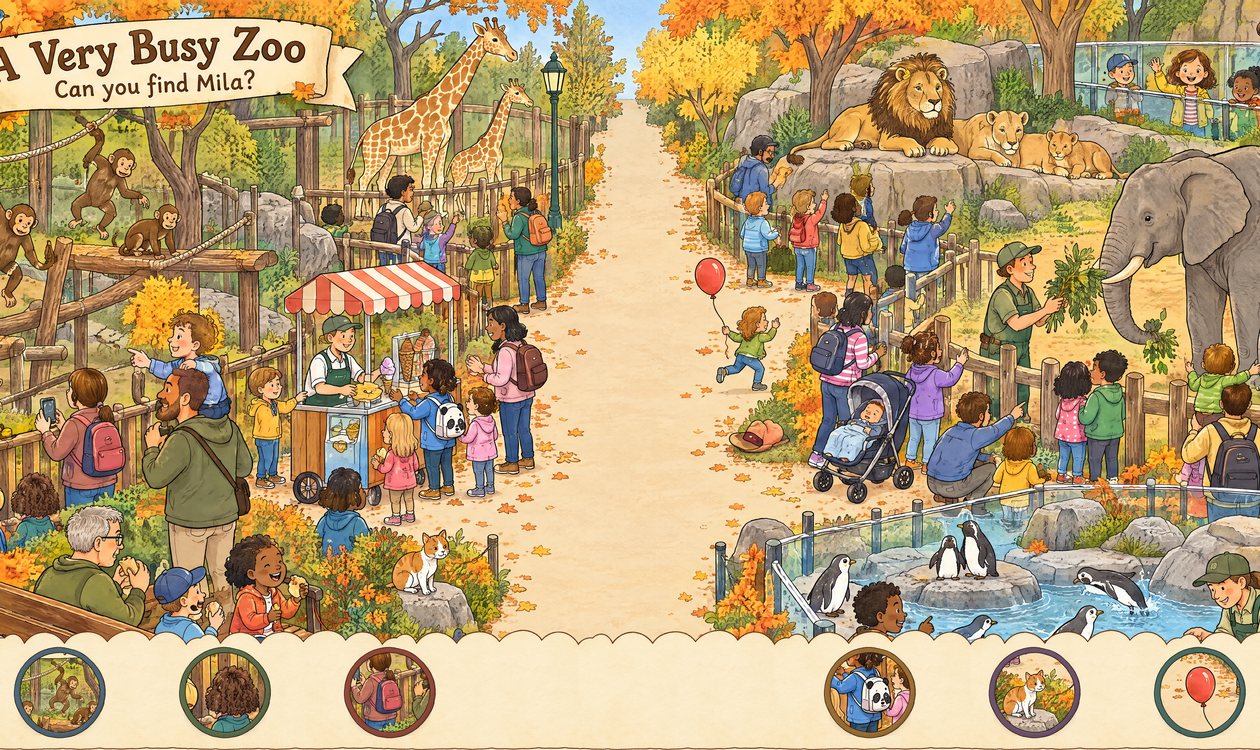
Seek-and-find books: from what age, and what do they train?
A two-year-old who will not sit through three pages of a story can spend ten minutes on a single page of a seek-and-find book. Parents notice it and wonder two things: from what age does this actually work, and is my child learning something or just being kept busy? Research on how toddlers search gives a clearer answer than you might expect, and it also shows where these books do not fit.
What a toddler can already find
In 2002 Peter Gerhardstein and Carolyn Rovee-Collier tested children between 12 and 36 months on a touch screen: find one target among a growing crowd of distractors. Their study in the Journal of Experimental Child Psychology found two things that every parent with a busy picture book will recognise.
A target that differs in one way, such as the only red one, was found just as fast in a big crowd as in a small one. A target that differs by a combination, the red one with this particular shape, took longer with every distractor that was added. And across the board, children got faster as they got older.
Translated to the page in front of you:
- Around one to two: pointing and naming. “Where is the dog?” works when there are a handful of large things on the page.
- Around two to three: finding one thing that stands out by a single feature. The yellow jacket, the red balloon.
- From about three: finding by description. “The boy with the blue hat who is holding a dog” is a combination search, and that is exactly the kind that is hard before three.
- From five or so: tiny details, races against a sibling, and pages where the target is deliberately camouflaged.
So the honest answer to “from what age” is not one number. It depends on what the page asks.
What happens in the talk around the page
The searching is only half of it. The other half is what the adult says, and books without text change that.
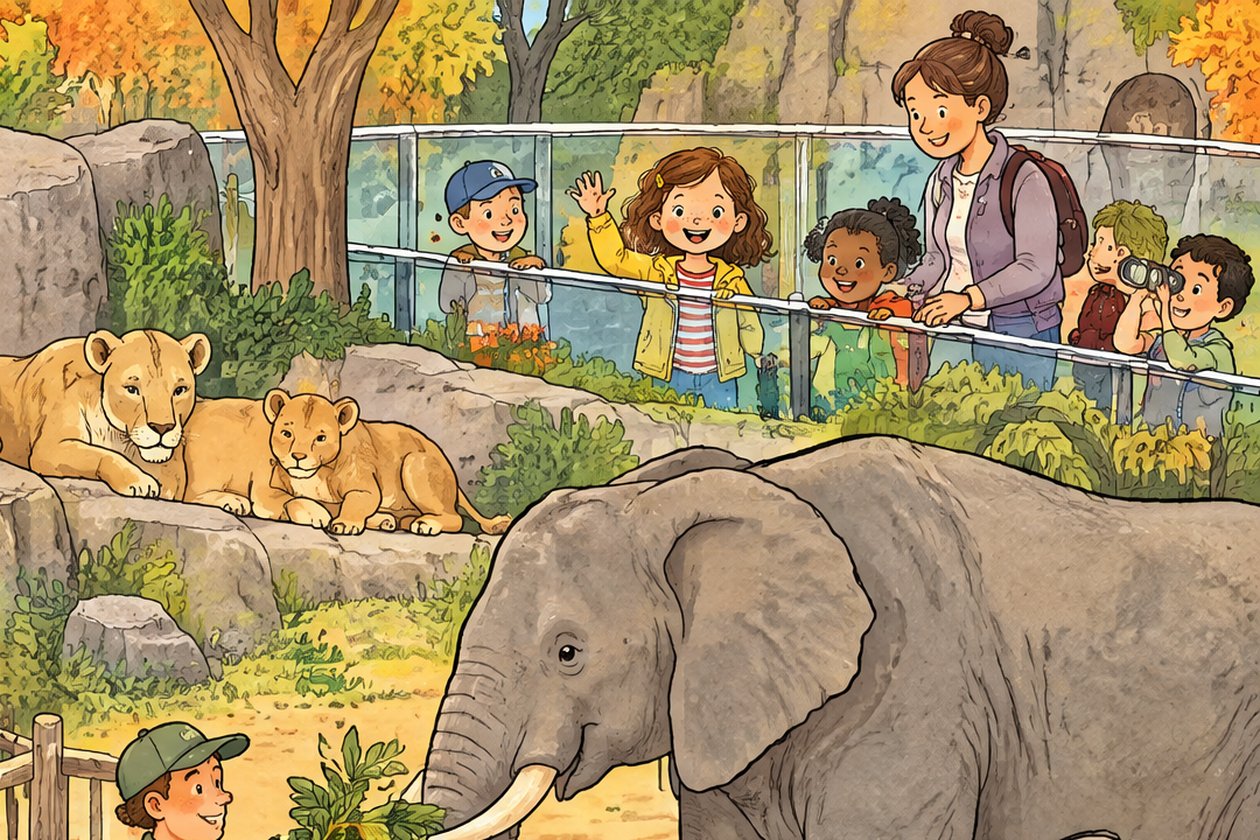
Leydi Chaparro-Moreno and colleagues recorded thirteen preschool teachers reading to groups of children of about four, once with a wordless picture book and once with a matched book with text. With the wordless book the children produced more words, more different words and more utterances, and the teachers gave more support to their thinking (Early Childhood Research Quarterly, 2017). Without a text to read out, the adult starts asking and the child starts telling.
A caveat belongs here. That study used a wordless story in a classroom, not a seek-and-find book on a sofa. We do not know of a study that tested seek-and-find books directly against storybooks at home, and anyone who claims a measured vocabulary gain from them is ahead of the evidence.
What does exist is a careful description of how these books are read. Literary scholar Cornelia Rémi calls it reading as playing: there is no fixed order, the child decides where to look, and the same page is read differently every time. That is unusual. In almost every other book the adult sets the pace.
When a seek-and-find book does not fit
- As the last book before sleep. Searching wakes a child up. A story with rhythm and an ending does the opposite, which is why a bedtime story with their own name is the better choice at that moment.
- Under about two. Most scenes are simply too crowded. A board book with five big objects per page does the same job without the frustration.
- For a child who gets upset when they cannot find it. Take turns, give a hint by area (“somewhere near the water”), and never time it.
- When your child wants a story. Some children want to know what happens next. A book without a plot will not give them that.
Alternatives that are just as good
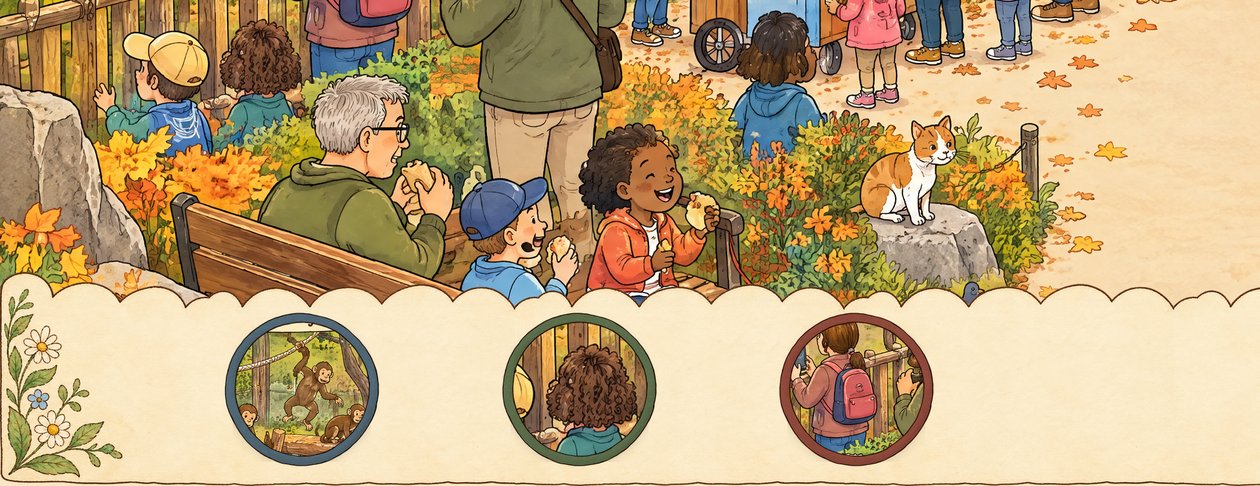
You do not need a personalised book for any of this. Rotraut Susanne Berner’s seasonal books are wonderful from two, with characters that return on every page. “Where’s Wally?” by Martin Handford is the classic for five and up, and it is genuinely hard. The “I Spy” books by Jean Marzollo and Walter Wick do it with photographs and riddles. The library has all of them.
The cheapest version costs nothing: take a photo of a messy living room and ask your child to find the red sock.
Where a book with your own child in it fits
There is one target a child knows better than any other: their own face. In the classic mirror test by psychologist Beulah Amsterdam (1972) most children recognise themselves somewhere between 18 and 24 months, and from then on “find yourself” is a single, very familiar feature to look for. We wrote more about that in why children want to see themselves in books.
That is the idea behind our seek-and-find book with your own child hidden in it. Building it taught us a few things we had not expected, and they say something about how these books work.
Pasting a photo into the scene failed at once. The child stood out because they were painted while everyone else was drawn, so there was nothing to search for. We now draw the child once in the style of the book and hide that drawing.
Size mattered more than style. Whenever the child was drawn larger than the crowd, the image model gave them more detail, and more detail is exactly what the eye finds first. Same scale as the neighbours fixed it.
And the model sometimes left the child out altogether, or drew them twice. A puzzle without a solution is the one mistake only your child would discover, after fifteen minutes of looking. Every page is now counted before it goes into a book.
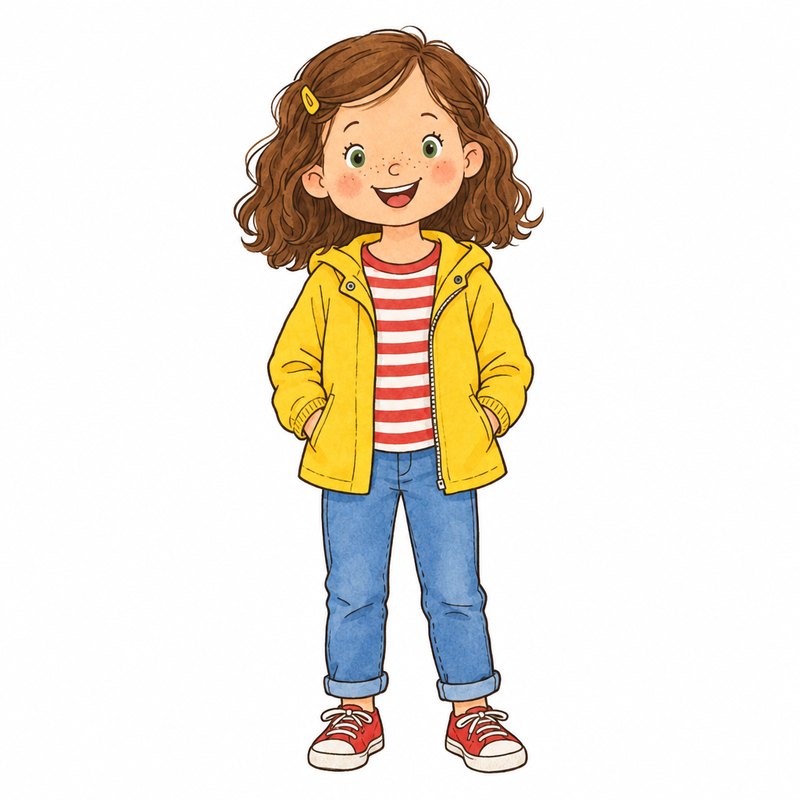
Ours suits roughly two to eight. Under two, pick a board book. For a nine-year-old, Wally is harder and better.
A seek-and-find book is not a lesser book because it has no story. It is the one book where the child leads and the adult follows, and that is worth having on the shelf next to the stories.