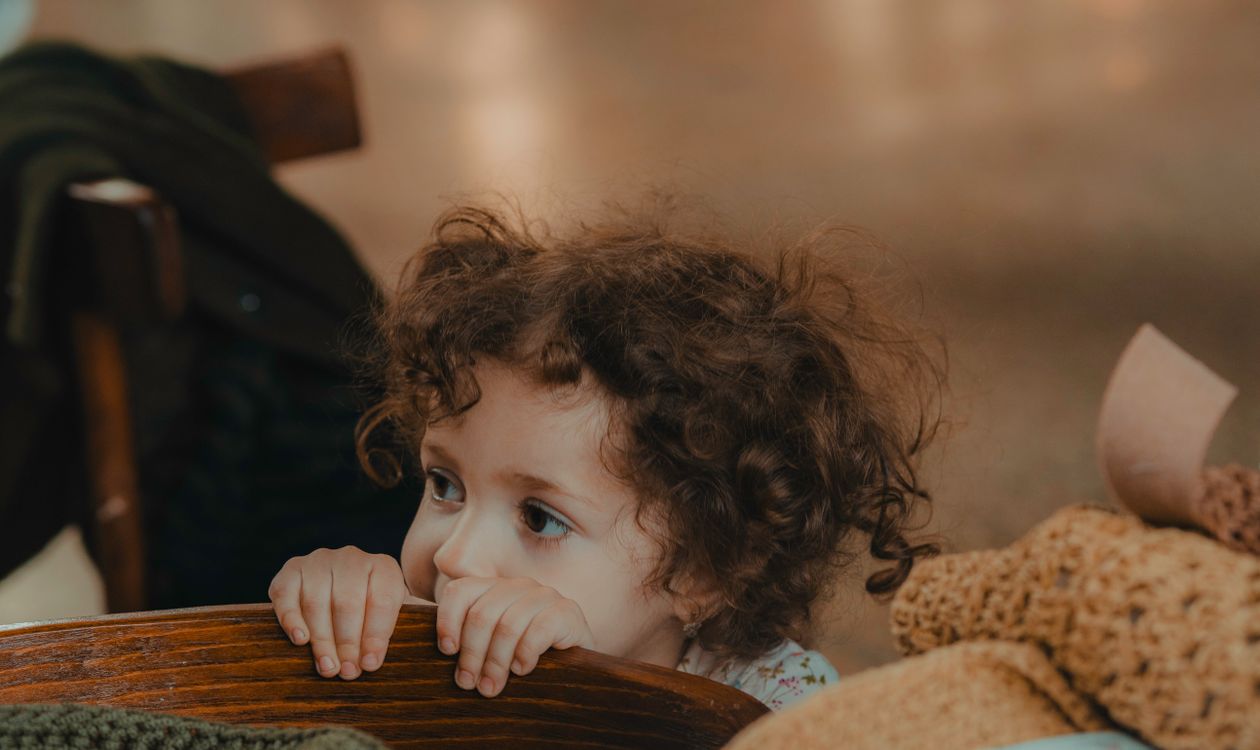
Shy child and the school play: what the research says
Somewhere between now and December, most primary schools start handing out parts. The nativity, the Christmas play, the winter concert, the class assembly where every child says one line into the microphone. For many children it is the highlight of the term.
For a shy child it can mean weeks of tummy aches. This piece is about those children: how common it is, what research says about pushing and protecting, and what you can actually do in the run-up to the performance.
How normal it is
Shyness is not a parenting mistake, and it is not a phase that runs the same course for everyone. The best-known researcher in this area, Jerome Kagan at Harvard, called it behavioural inhibition: an inborn tendency to hold back and watch when something is new. An estimated 15 to 20 per cent of young children have that tendency strongly, as Clauss and Blackford summarised in a 2012 review of the research.
In his famous 1988 study in Science, Kagan found that most very reserved two-year-olds were still quiet and reserved at seven. But the follow-up research is more reassuring than that sounds. In a later group, only a small share of children stayed consistently inhibited at every age (Kagan, Snidman and Arcus, 1998). And two thirds of strongly inhibited toddlers had not developed serious social anxiety by the age of thirteen (Schwartz, Snidman and Kagan, 1999).
Kagan later put it like this himself: a temperament predicts what a child is unlikely to become better than what they will become.
Shy is not the same as quiet
Two things often get mixed up. A shy child wants contact but finds it frightening. A child who prefers to play alone simply enjoys that, and there is nothing wrong with it. The psychologists Cheek and Buss showed as early as 1981 that these are two separate traits, and the review by Rubin, Coplan and Bowker (2009) makes the same distinction in children.
The often quoted “a third to a half of people are introverts” comes from Susan Cain’s book Quiet, where it is itself an estimate, not a measurement.
One more surprise for play season: stage fright is something else again. In Schwartz’s 1999 study, the inhibited toddlers were no more likely than anyone else to suffer from performance nerves as teenagers. So a quiet child can be perfectly fine on a stage, and a chatty one can be terrified of it.
What backfires
There are two reflexes, and research is critical of both.
Pushing. In a study by Rubin, Burgess and Hastings (2002), inhibition in toddlers only predicted more withdrawn behaviour at four when the mother was intrusive or belittling. “Don’t be so shy” in front of other people does not work, and teasing certainly does not.
Taking over. The opposite, arranging every situation for your child and avoiding anything nerve-racking, leaves a child without their own ways of coping (Rubin and colleagues, 2009). To be fair, a Dutch study found no sign that overprotection strengthened inhibition over time (Vreeke and colleagues, 2013). The evidence is partly an association, and it probably runs both ways: a withdrawn child also draws out protection.
What does help before the big day
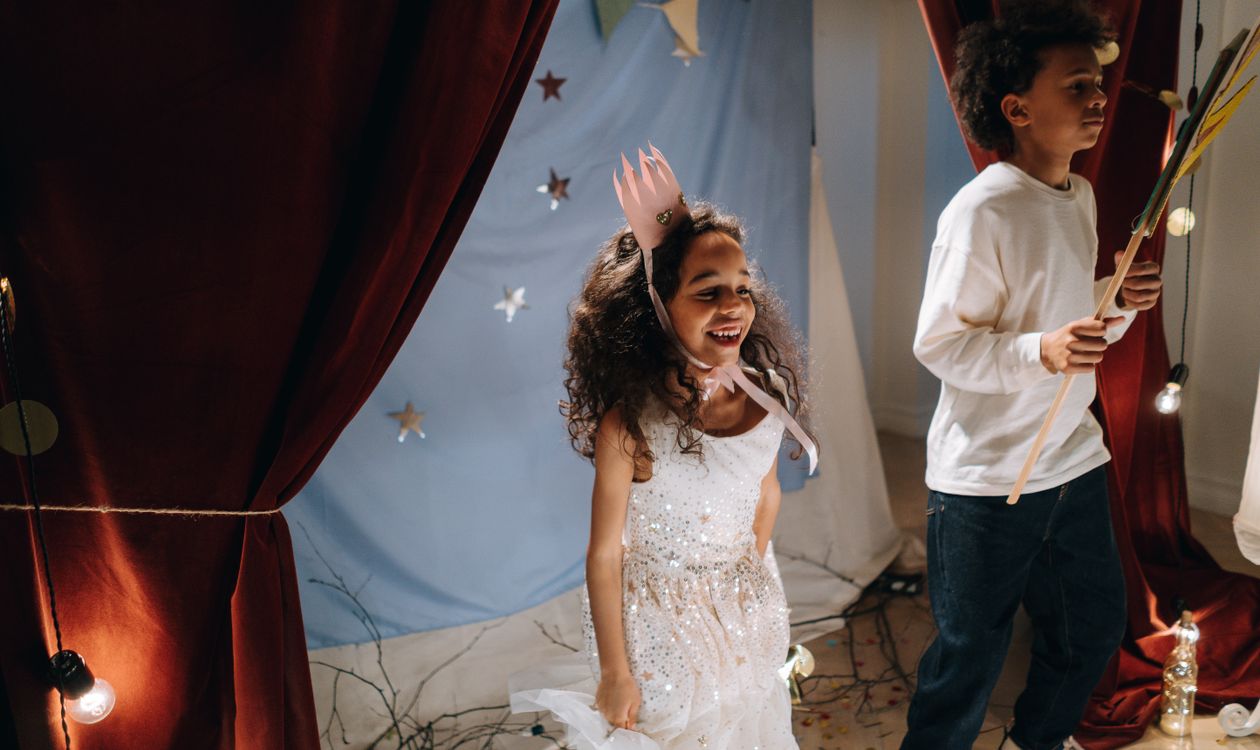
What research keeps finding is a gentle middle road: accept who your child is, encourage them anyway, and let them take small steps. An Australian programme for parents of inhibited preschoolers, Cool Little Kids at Macquarie University, practised exactly that and led to fewer anxiety disorders years later (Rapee and colleagues, 2005 and 2010). The temperament itself did not change, and that was never the aim.
In practice, for play season:
- Ask the teacher about a job backstage: the lights, the props, keeping the running order. That is taking part too.
- Group rather than solo. Singing with the class is something else entirely from saying a line alone.
- Rehearse at home, with the soft toys as the audience. Once, not every evening.
- Praise the trying, not how it went.
- Let them know that not wanting to is allowed. That room is exactly what makes the next time easier.
When to ask for support
Being shy is not a problem. It becomes one when your child suffers from it every day: does not want to go to school, does not speak at school at all while chatting away at home, or misses having friends and is sad about it. Then your GP, health visitor or the school nurse is the first step. A school play does not cause that, but it can make it visible.
Does a book with your child as the hero suit a shy child?
We make books in which the child is the main character, so we need to be honest here. For some shy children that is too much spotlight: their own face on every page, their name read out again and again. If your child flicks past quickly or asks whether the name can be changed, that is a signal to respect. There is more on this in our piece on when a personalised book does not fit.
For other shy children it works the other way round. A book is a stage without an audience: just you and your child on the sofa, and nobody watching. Research into how readers take on a character’s experience (Kaufman and Libby, 2012) was done with adults, so nobody knows exactly what that means for a child reading their own name. Why seeing themselves in a story matters at all is in our piece on children who see themselves in books.
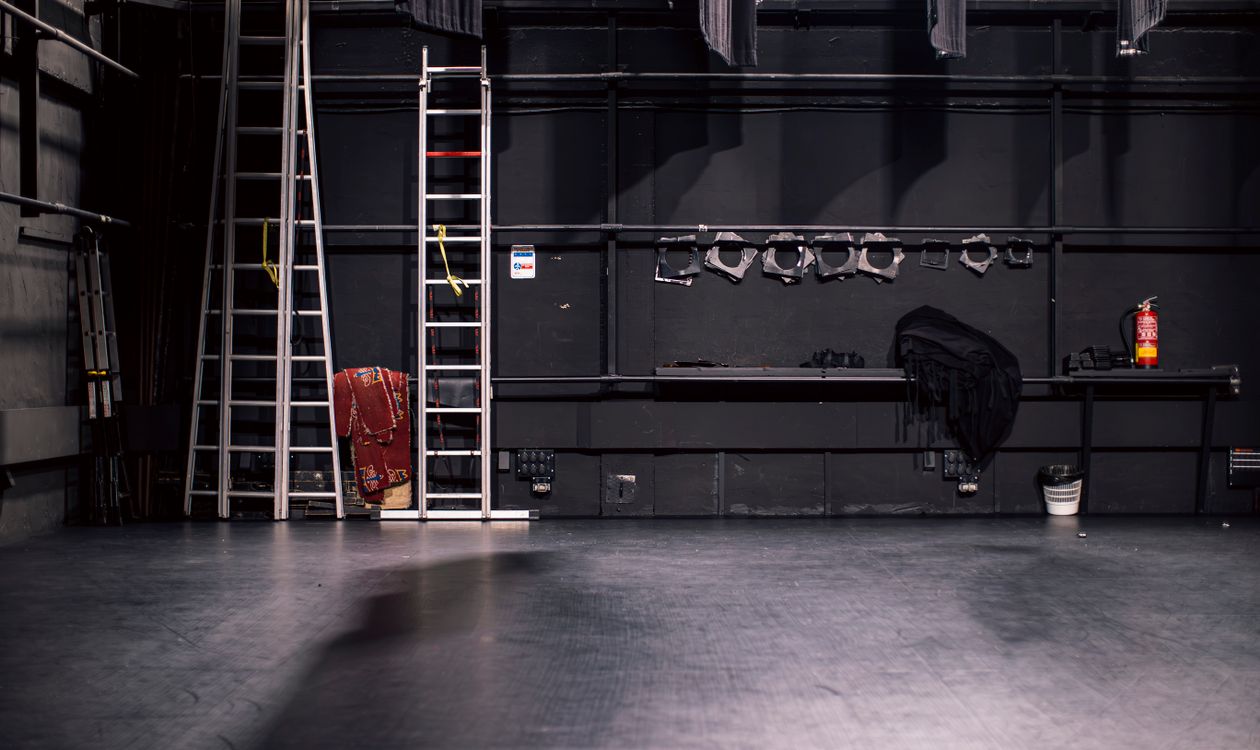
What we do know is which story we would not want to be missing. That is why, among our stories that give your child the lead role, there is one called “The one who works the lights”: the child who absolutely refuses to perform, but runs the lights backstage and saves the evening. The simplest alternative is free, by the way: a picture book from the library about a child who finds something scary.
In the end, not every child needs the spotlight. Sometimes the best thing you can do this term is to shine a light on what a child sees from the side.