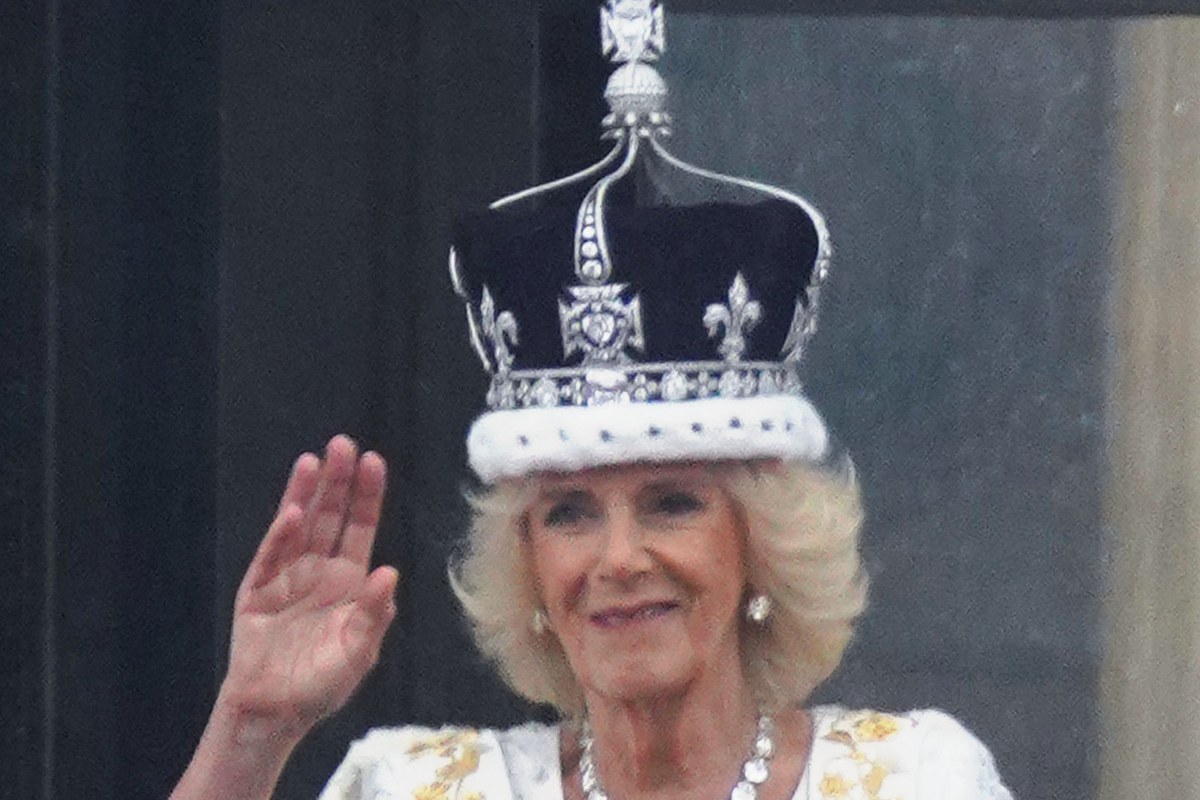
Queen Camilla Is Giving 800,000 Children the Same Book
Somewhere in the autumn term of 2026, a box arrives at nearly every primary school in the United Kingdom. Inside are copies of the same novel, each one stamped with a royal crest on the cover and carrying a personal message from Queen Camilla. By Christmas, 800,000 children will own it. Same title, same cover, same message, one per child.
It is almost certainly the largest single book giveaway in British history. It is also, depending on who you ask, either a brilliant piece of national reading advocacy or an expensive misunderstanding of how children actually start to read.
What is being given away, exactly
The book is Impossible Creatures by Katherine Rundell, a fantasy novel about a hidden archipelago where mythical creatures still exist. It won the Waterstones Book of the Year and has been compared, relentlessly, to Philip Pullman and early Harry Potter.
Each copy is a special edition. It carries a specially designed royal stamp on the cover and a message from The Queen printed inside. In that message she calls Rundell “one of my favourite writers” and describes the book as “a brilliant fantasy that will introduce you to a host of mythical friends and terrifying enemies”, closing with the hope that children “will love it as much as I do”.
The scheme is delivered by the National Literacy Trust, of which The Queen is Patron, and was announced on royal.uk on 17 July 2026, on her birthday.
Who gets one, and the detail everyone gets wrong
This is where most of the coverage goes sideways, so it is worth being precise.
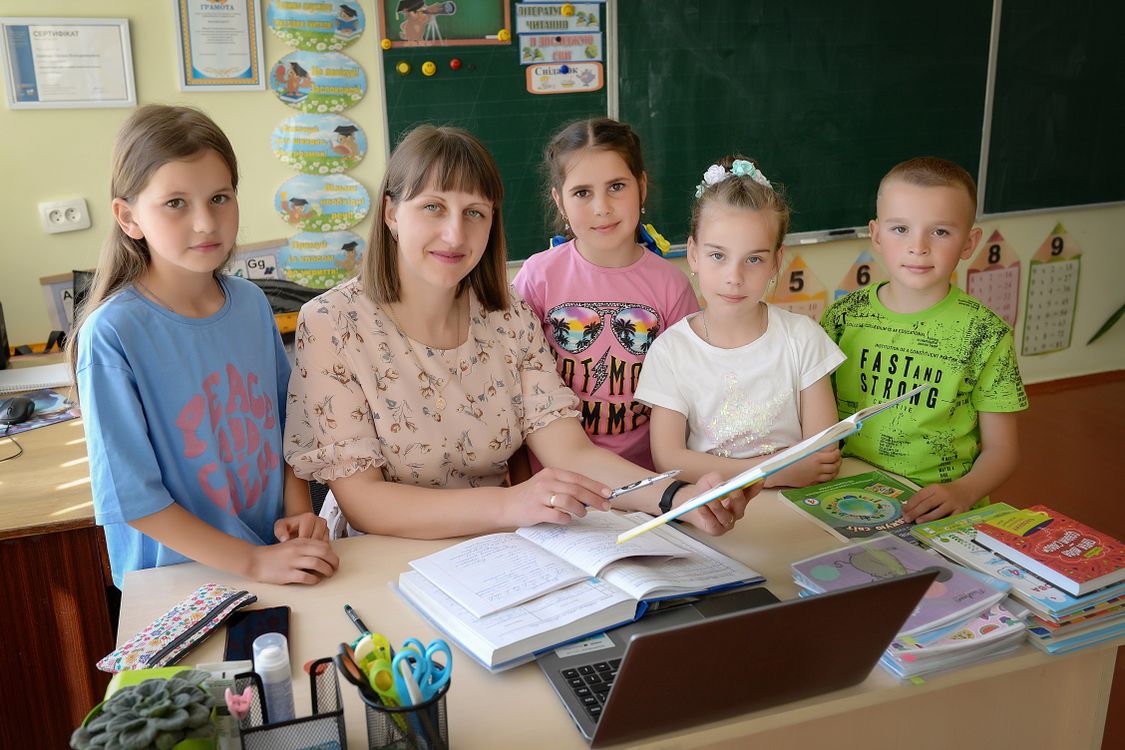
The books go to Year 6 children in England, Wales and Northern Ireland, and P6 children in Scotland, plus home-schooled children of the equivalent age across the UK. Year 6 is the final year of primary school. Those children are ten and eleven years old, not six. The number in “Year 6” is the school year, not the age of the child in it.
Schools do not have to apply, register, or opt in. According to the National Literacy Trust’s resource page, copies are shipped directly to schools from the autumn term, along with a free online assembly led by Rundell herself, a free audiobook edition, and classroom resources. Libraries handle distribution to home-schooled children. There is also targeted outreach through hospitals, care settings, refuges and food banks, so that children outside the school system are not missed.
Why now
The giveaway is the flagship gesture of the National Year of Reading 2026, and the timing is not accidental.
The National Literacy Trust’s own annual survey, the largest it has ever run with 125,375 children and young people taking part, found that 36.1% of 8 to 18-year-olds say they enjoy reading in their free time. That is a slight improvement on 2025, which was the lowest figure since the Trust started asking in 2005. Reading enjoyment has not recovered. It has stopped falling.
Year 6 sits almost exactly on the hinge of that decline. It is the age at which enjoyment of reading tends to drop away sharply, just as children are about to move to secondary school. Aiming at that year group is a deliberate choice, not a random one.
The criticism, which is sharper than you would expect
A national book gift sounds unobjectionable. It has not been received that way by everyone in children’s publishing.
The most substantial objection is about the “one” in “one book”. Impossible Creatures runs to 368 pages of dense fantasy. Publisher David Salariya argued that a single title cannot serve “the strong readers, the reluctant ones, the children reading three years behind for whom a dense 368-page fantasy is a wall rather than a door”. For a confident ten-year-old it is a treat. For a child at the back of the class who has spent five years quietly hiding how hard reading is, an unrequested brick of a novel is not obviously a gift.
The second objection is about choice. The research on reading for pleasure points consistently in one direction: children read more when they pick the book themselves. Critics have suggested book tokens, varied class sets, or school book fairs where children choose, all of which preserve that agency. A single title chosen centrally and handed down removes it, however good the title is.
The third is about the selection process. Nine months before the announcement, Disney acquired the film rights to Impossible Creatures in a deal reported in the seven figures, with Rundell adapting the first two books herself. Nobody has produced evidence of a link, and the book’s prizes long predate the deal. But it does raise a fair question about what an openly evidence-led selection would have looked like, and whether anyone outside the room can tell the difference.
And the fourth is about scale versus duration: a gesture at Christmas against a decline that has run for twenty years, with school library funding still where it was.
What the scheme does get right
The criticism is fair without being the whole picture.
Physical ownership matters. There is a real difference between a book a child borrowed and a book that is theirs, that goes home, that sits on a shelf with their name in the front of it. For a child whose home has few books, one hardback with a royal stamp on the cover is not nothing.
The free audiobook matters too, and is easy to overlook. A child who cannot yet read 368 pages can still follow the story, and listening is not a lesser form of reading a story. We looked at what the brain-imaging research actually says about that in our piece on reading aloud, audiobooks and screens.
And there is an argument for a shared object. When every child in a year group has the same book, they can talk about it. That is the logic behind national reading days everywhere, and it is not a silly one.
The awkward question underneath all of this
Strip away the crown and the headline, and the giveaway is a live experiment in a question every parent recognises: what actually makes a child want to open a book?
The evidence keeps returning the same two answers, and neither of them is “the book was good”. They are choice and ownership. A child reads more when the book was their pick, and when the book belongs to them rather than to the school.
A single national title delivers ownership beautifully and choice not at all. That is precisely the trade-off the critics are pointing at, and it is why “which book” was always going to be an impossible question. There is no title that is simultaneously right for a child reading three years ahead and a child reading three years behind.
This is the same axis a personalised children’s book sits on, just at the opposite end. A book in which the child is the main character is about as far from “the same book as 799,999 other children” as you can get. It is chosen, and it is unmistakably theirs. That is not a claim that it works better than Impossible Creatures, which would be a silly comparison. It is a claim about which lever it pulls.
Where a personalised book does not help
It is worth being blunt about the limits, because they are relevant here.
A personalised book is not a fix for a struggling ten-year-old. At Year 6 age, a child who finds reading hard needs the right reading level, a decent school library and someone with time, and a name on the page does not supply any of those. Our own books sit in a much younger bracket, roughly ages two to eight, where the pull of self-recognition is strongest and where the reading is still shared with an adult. We wrote about the honest edges of that in when a personalised book is not the right choice.
If the child in your head is ten and reluctant, the better moves are the ones the critics named: a book token so they choose, a library card, a graphic novel nobody makes them feel bad about, or an audiobook in the car.
If you are outside the UK
Nothing arrives at your door. But the underlying idea, a free book given to a whole year group at once, exists in several countries in a form that quietly solves the choice problem the UK scheme has.
Germany’s Ich schenk dir eine Geschichte, run for World Book Day, hands out a voucher rather than a book, which pupils redeem at a bookshop. The Netherlands has Bookstart and the Kinderboekenweek. Those models keep the child’s hand on the decision, which is the one thing 800,000 identical copies cannot do.
What all of them share is the part worth stealing regardless of where you live: a specific moment, a book that belongs to the child, and an adult who makes something of it.
The most interesting thing about The Queen’s Christmas Present is not the crest on the cover. It is that a scheme this large, this well-funded and this well-intentioned still cannot escape the problem that reading is personal, and that 800,000 copies of anything is an answer to a question about logistics rather than a question about children. What works at scale and what works for one child at bedtime turn out to be different problems.
Cover photo: Queen Camilla on the Buckingham Palace balcony on coronation day, 6 May 2023. Photo Isaac Mayne / Department for Culture, Media and Sport, via Wikimedia Commons, public domain.
_(cropped).jpg)